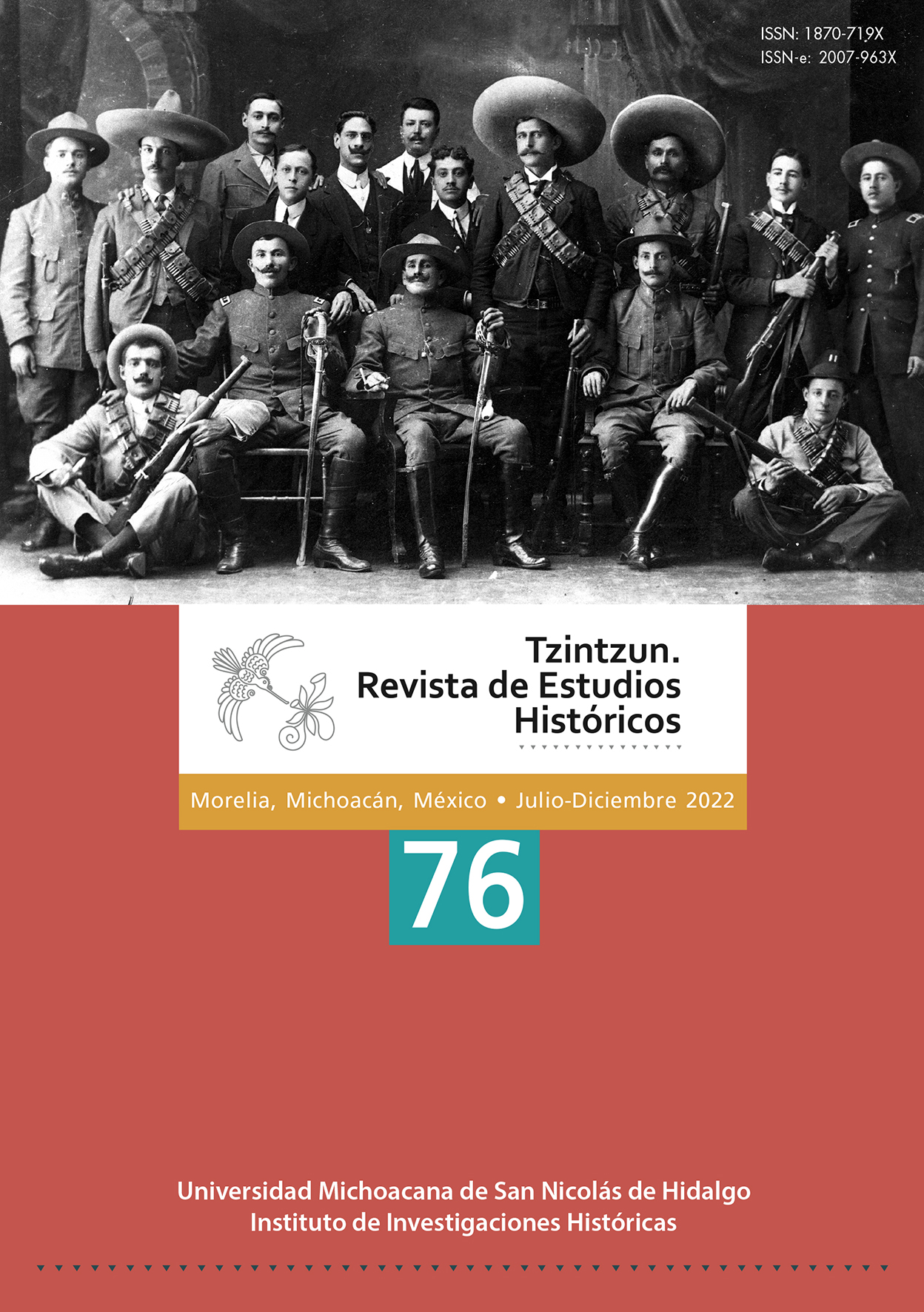
La búsqueda de un lugar de memoria para la Revolución mexicana: Los primeros años de la institucionalidad del 20 de noviembre (1936-1946)
DOI:
https://doi.org/10.35830/treh.vi76.996Palabras clave:
20 de noviembre, día de la Revolución mexicana, conmemoración, lugares de memoria, nacionalismo, unidad nacional, MéxicoResumen
El 20 de noviembre se incorporó al calendario cívico de fiestas patrias mexicanas a partir de 1936. Con dicha institucionalización, la fecha se transformó en un “lugar de memoria” para todos los mexicanos y no en una conmemoración de solo una parte de la sociedad, ya que fue asumida por el Ejecutivo y dejó de ser utilizada únicamente por el PNR. Durante estos años, en la narrativa conmemorativa y en los discursos de los representantes del partido gubernamental y del Estado, se estableció que a través de la conmemoración de la Revolución se reivindicaba a las masas populares que habían protagonizado este proceso entre 1910-1920. Se trató de una utilización recurrente del pasado y del presente que fue acompañada por la construcción de un discurso etnográfico que tenía la intención de mostrar que el Estado y la sociedad marchaban juntos hacia el horizonte de una revolución unida.
Descargas
Referencias